An irrigation system is one of the most practical investments a Charleston homeowner can make. The Lowcountry climate is not forgiving to landscapes that depend on manual watering — summer heat arrives fast, rainfall is inconsistent, and the sandy coastal soils that dominate much of Charleston County drain quickly, leaving plants stressed between rain events. A professionally installed irrigation system solves that problem consistently, keeps the landscape healthy without the daily labor of hand watering, and — when designed well — uses significantly less water than hose or sprinkler can methods.
At Cramers Landscaping, we design and install complete irrigation systems for residential and commercial properties throughout Charleston and the Lowcountry. This guide covers everything you need to know: the types of systems available, what installation involves, what a system costs, how to maintain it, and what Charleston-specific factors affect design decisions.
Why Irrigation Matters in Charleston’s Climate
Charleston sits in USDA Plant Hardiness Zone 8b/9a, with hot, humid summers and mild winters. The growing season is long — plants are active and water-dependent from March through October. During peak summer, a mature landscape may need an inch or more of water per week to stay healthy, and Charleston’s summer rain patterns are irregular enough that supplemental irrigation is necessary for anything beyond the hardiest drought-tolerant plantings.
There are also soil considerations unique to the area. Coastal Charleston soils tend toward sandy loam that drains fast and holds little moisture. Properties further inland often have heavy clay that holds water but can become saturated during heavy rain events, creating drainage and root health challenges. A properly designed irrigation system accounts for the specific soil conditions on your property and delivers water in a pattern and volume that matches what your landscape actually needs.
The bottom line: a landscape investment — whether it is a newly installed lawn, a bed of shrubs and perennials, or a mature garden — is protected by irrigation. Without it, a dry summer spell is enough to set back years of growth.
Types of Irrigation Systems
In-Ground Sprinkler Systems
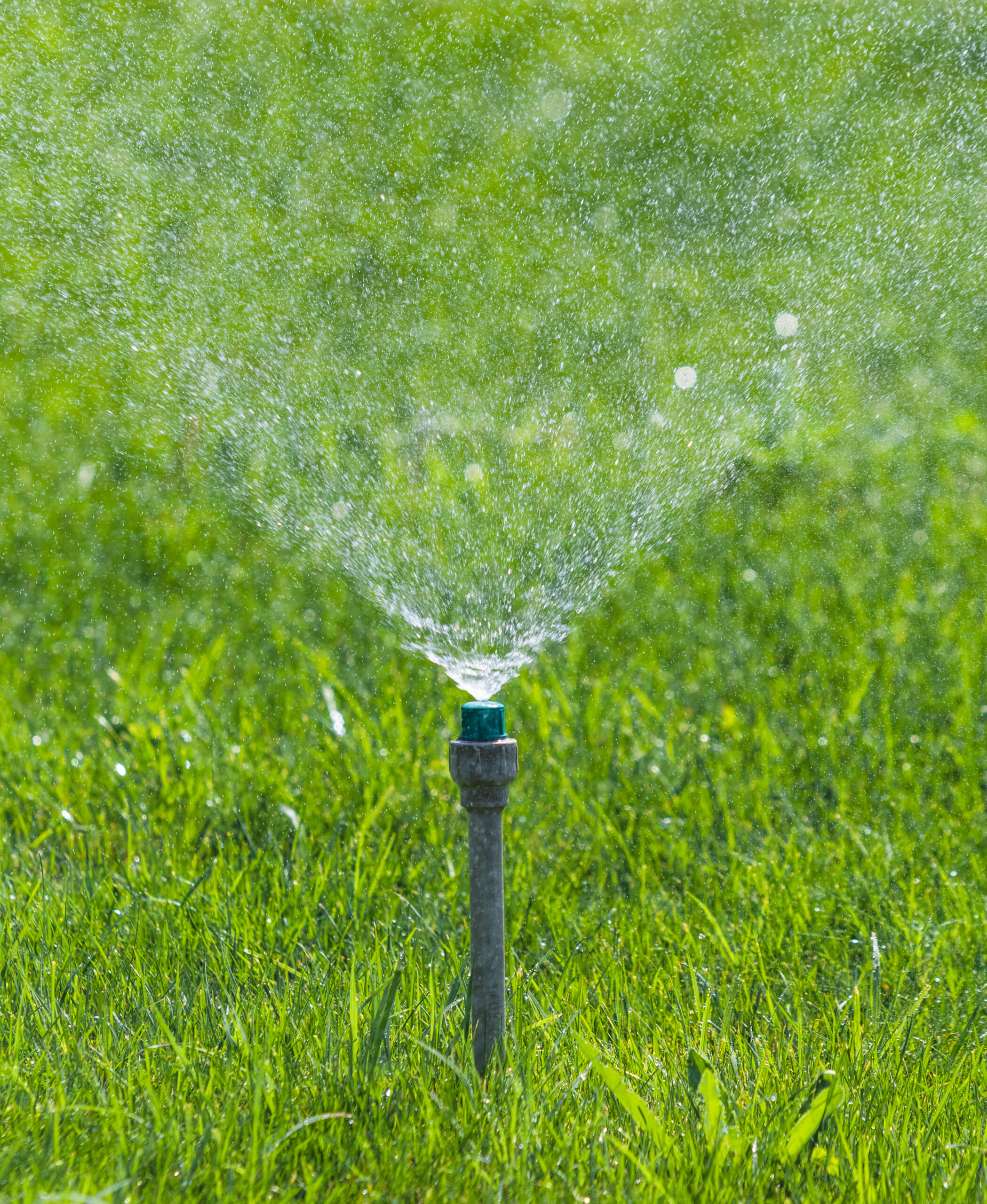
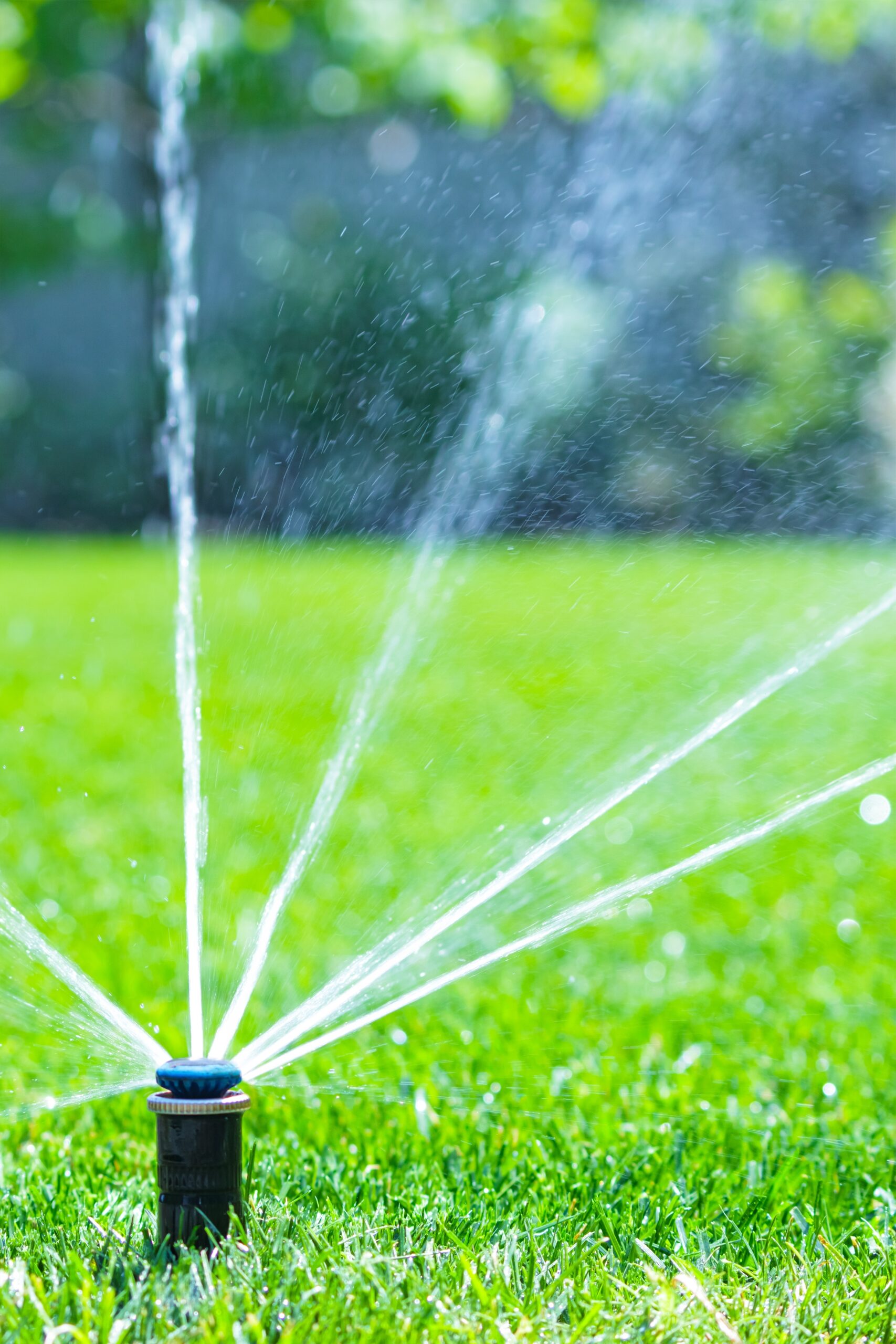
An in-ground sprinkler system is the most comprehensive irrigation option for lawns, mixed landscape beds, and large planting areas. Pop-up spray heads and rotor heads are installed at grade level and connected to a pressurized supply line that runs underground throughout the irrigation zones. The heads retract flush with the ground when not in use, protecting them from mowing and foot traffic.
Sprinkler systems are divided into zones — typically one zone per area with similar water needs. Lawn areas are zoned separately from shrub beds, and sun-exposed areas are separated from shaded areas. Each zone has its own valve on a manifold that is controlled by the irrigation timer (controller).
For Charleston lawns, in-ground sprinklers are the standard choice. St. Augustine grass, Bermuda, Zoysia, and centipede — the most common warm-season turf varieties in the Lowcountry — all benefit from the consistent coverage that a properly designed sprinkler system delivers.
Drip Irrigation
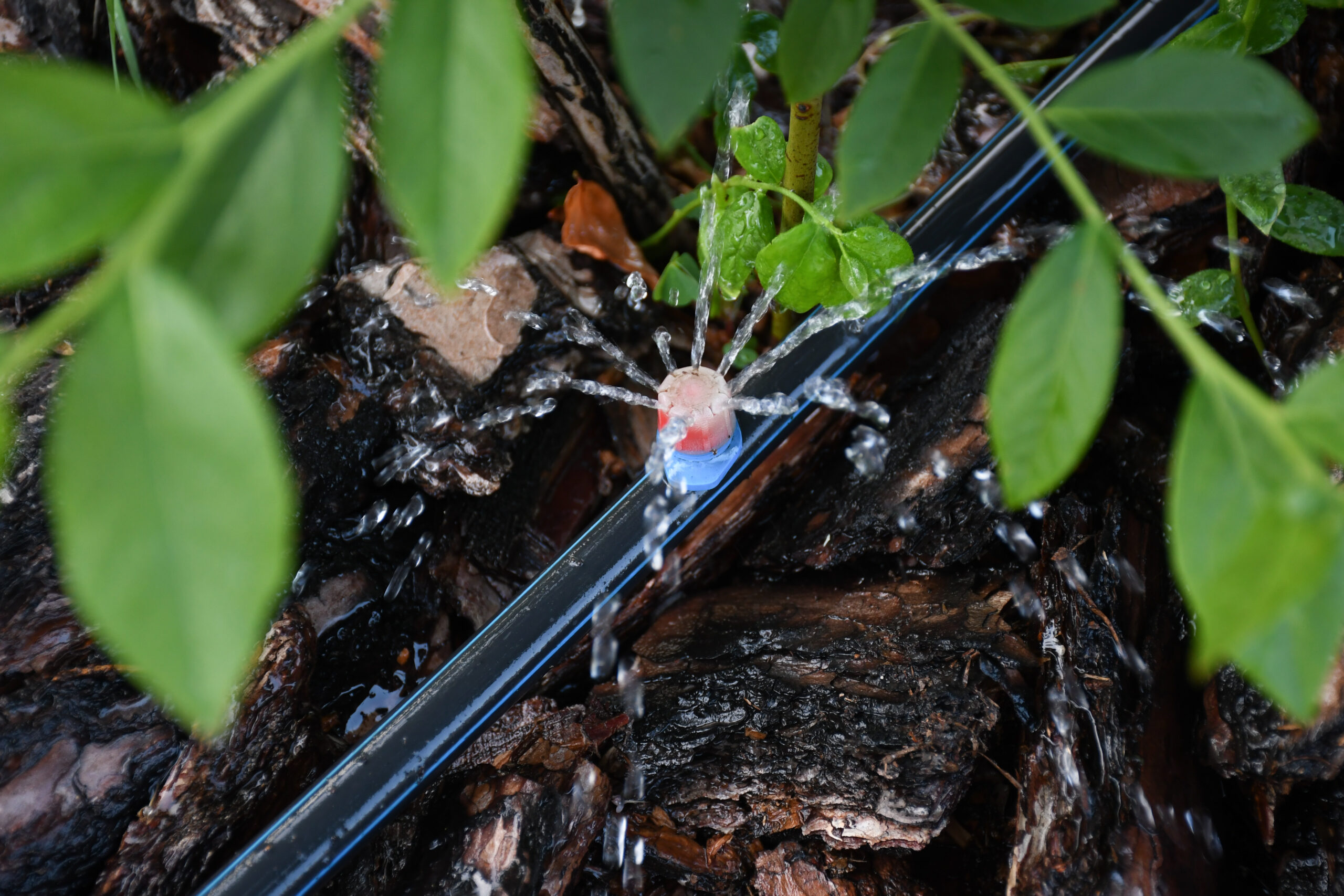
Drip irrigation delivers water directly to the root zone of plants through low-flow emitters installed at or just below the soil surface. Because the water is delivered slowly and directly to the plant, drip systems are highly efficient — there is minimal evaporation and no overspray onto hardscape or areas without plants.
Drip irrigation is the preferred choice for landscape beds, raised planters, container gardens, and vegetable gardens. It is especially effective in Charleston for newly planted shrubs and perennials that need consistent root zone moisture during establishment. Drip systems can be combined with sprinkler zones in a single controller setup, with the drip lines running separately to the bed areas while sprinklers handle the lawn.
Smart Irrigation Systems
Smart irrigation controllers represent the most significant advancement in residential irrigation in the last decade. A smart controller connects to your home’s Wi-Fi and pulls local weather data — rainfall, temperature, humidity, and evapotranspiration rates — to automatically adjust watering schedules based on actual conditions rather than a fixed timer.
If it rained overnight, the system skips the morning cycle. If a heat wave is forecast, it increases watering duration. The result is significant water savings — typically 30 to 50 percent less water use compared to a traditional timer — without any manual schedule adjustments.
Hunter and Rain Bird are the industry standard brands for smart controllers. We program every system we install with a smart controller as the default, and the efficiency gains typically offset a meaningful portion of the system’s long-term operating cost.
Subsurface Drip Irrigation
Subsurface drip is a specialized system where drip lines are buried several inches below the soil surface, delivering water directly to the root zone with zero evaporation and no surface disturbance. It is the most water-efficient option available and is particularly effective for established shrub beds and lawn areas where the piping can be buried and left in place long term.
Subsurface drip has a higher installation cost than standard drip but is worth considering for properties prioritizing water conservation or in areas with water use restrictions.
What Irrigation Installation Involves
Site Assessment and Design
A proper irrigation installation starts with a thorough site assessment. We measure the property, map the planting areas and lawn zones, identify the water source and supply pressure, and design a system layout that provides complete coverage without over-spraying onto hardscape or structures.
Pressure testing the supply line is a critical step — an undersized or overpressured supply will cause system performance problems regardless of how well the heads are installed. If the water pressure is insufficient for the planned system size, a booster pump or pressure regulator may be part of the design.
Trenching and Pipe Installation
The irrigation supply lines run underground, which requires trenching through the lawn and planting areas. We use a mechanical trencher that cuts a narrow trench — typically 6 to 8 inches deep — along the planned pipe routes. The pipe is installed in the trench, connected to the manifold and each head location, and the trench is backfilled and tamped.
For established lawns, the trench is cut and filled in a way that allows the turf to recover within a few weeks. We take care to avoid existing plant root systems and utility lines, which are marked before any trenching begins.
Controller and Valve Installation
The irrigation controller is typically mounted in the garage or exterior of the home in a weather-resistant location. Each zone valve is installed at the manifold — a central location where all the zone supply lines originate — and wired back to the controller. Once the system is installed, we program the controller, set zone run times based on plant water needs and the local climate, and walk the property with the homeowner to demonstrate the system operation.
System Commissioning
After installation, we run every zone and inspect each head for coverage pattern, spray distance, and proper arc alignment. Heads that need adjustment are fine-tuned on-site. We verify that the smart controller is connected and pulling weather data, and we set the initial seasonal schedule before leaving the property.
What Does an Irrigation System Cost in Charleston?
Irrigation installation pricing varies based on property size, system type, number of zones, and site conditions. General ranges for Charleston residential properties:
Small residential systems (up to 5 zones, up to 5,000 sq ft of coverage): $3,500 to $6,000
Mid-size residential systems (6 to 10 zones, 5,000 to 15,000 sq ft): $6,000 to $12,000
Large residential or estate systems (10+ zones, 15,000+ sq ft): $12,000 to $20,000+
These ranges include design, trenching, pipe, heads, valves, controller, and installation labor. Drip systems for bed areas add to the total when included in the same installation. Smart controller upgrades add a modest premium — typically $200 to $500 above a standard timer — that pays back quickly in reduced water bills.
The best way to get an accurate number for your property is a free on-site consultation. Property size and the specifics of your landscape determine cost more precisely than any general range can.
Irrigation Maintenance: What Your System Needs Each Season
An irrigation system that runs without seasonal maintenance will develop problems over time — clogged heads, cracked pipe from freeze exposure, misaligned spray patterns, and controller programming drift that wastes water. A seasonal maintenance routine keeps the system performing efficiently year after year.
Spring Startup
Spring startup (typically March in Charleston) involves turning the system on after the winter shutdown, checking each zone for proper operation, inspecting heads for winter damage or shifting, and verifying that the controller program is appropriate for the coming growing season. We also test the backflow preventer — a required device that prevents irrigation water from contaminating the domestic water supply — and replace it if it fails testing.
Mid-Season Check
A mid-season check in June or July catches coverage issues before they affect the landscape during the hottest part of the summer. We look for heads that have been knocked off-pattern by lawn mowing, broken sprinkler heads from foot or equipment traffic, leaks at fittings, and areas of the landscape showing drought stress that indicate coverage gaps.
Fall Winterization
Fall winterization involves blowing the system out with compressed air to remove all water from the pipes before the first freeze. Charleston rarely experiences hard freezes, but when freezing temperatures arrive, water in unprotected irrigation pipe can expand and crack the pipe, heads, and fittings. A proper blowout takes 20 to 30 minutes and prevents what would otherwise be costly spring repairs.
Water Conservation and Smart Watering for Charleston Properties
The EPA’s WaterSense program estimates that landscape irrigation accounts for up to 30 percent of household water use — and that roughly half of that water is wasted through inefficiency. In Charleston, where water rates have increased steadily and water conservation is a growing concern, an efficiently designed and properly programmed irrigation system is both economically and environmentally responsible.
Key conservation features we incorporate into every new system:
Smart weather-based controllers that skip or reduce watering after rain events and adjust for seasonal temperature changes.
Rain sensors that automatically shut off the system during rainfall — a backup to the smart controller’s weather data for real-time storm detection.
Matched precipitation rate design that ensures all heads in a zone apply water at the same rate, preventing overwatering in some areas while underwatering others.
Drip irrigation for beds where applicable, eliminating the evaporation losses that come with overhead spray in exposed bed areas.
Seasonal schedule programming that reduces run times in cooler months when plant water demand is lower.
Irrigation FAQ for Charleston Homeowners
How long does irrigation installation take?
A typical residential system takes one to two days for installation, depending on the property size and number of zones. Larger or more complex properties may require an additional day for commissioning and adjustments.
Do I need to be home during the installation?
We ask that a homeowner or authorized contact be available at the start of the job to confirm the controller location, water source connection point, and any property access restrictions. You do not need to be present throughout the installation.
How do I know if my existing system needs replacing vs. repair?
Older systems with frequent leaks, inconsistent coverage, or heads that are too shallow for modern mowing heights can often be repaired at lower cost than full replacement. Systems more than 15 to 20 years old with frequent problems may be better candidates for a full replacement that incorporates current technology. We assess existing systems and provide an honest recommendation during the consultation.
Can you connect to my existing water supply, or do I need a dedicated irrigation line?
Most residential irrigation systems in Charleston connect to the domestic water supply at a separate tap — either at the meter or at the main supply line into the home. A dedicated irrigation meter is an option in some municipalities that reduces the sewage portion of the water bill for irrigation use. We handle the supply connection as part of the installation.
What is a backflow preventer and why is it required?
A backflow preventer is a device installed at the irrigation supply connection that prevents irrigation water from flowing backward into the domestic water supply. It is required by Charleston Water System and most municipalities for any irrigation system connected to the potable water supply. We install a testable backflow preventer on every system we install.
Ready to stop worrying about your landscape during summer dry spells?
Contact Cramers Landscaping for a free irrigation consultation — we’ll assess your property, design a system that covers your landscape efficiently, and give you a detailed quote. Call us at (843) 614-9773.