
Plants & Trees for Charleston, SC Landscapes
Plants and Planting What You Can Grow in the Lowcountry
Charleston sits where the temperate south and the subtropics overlap. That is why a yard here can hold a Japanese maple, a windmill palm and a live oak without any of it looking like a mistake — and why a few popular choices get burned by a single hard frost.
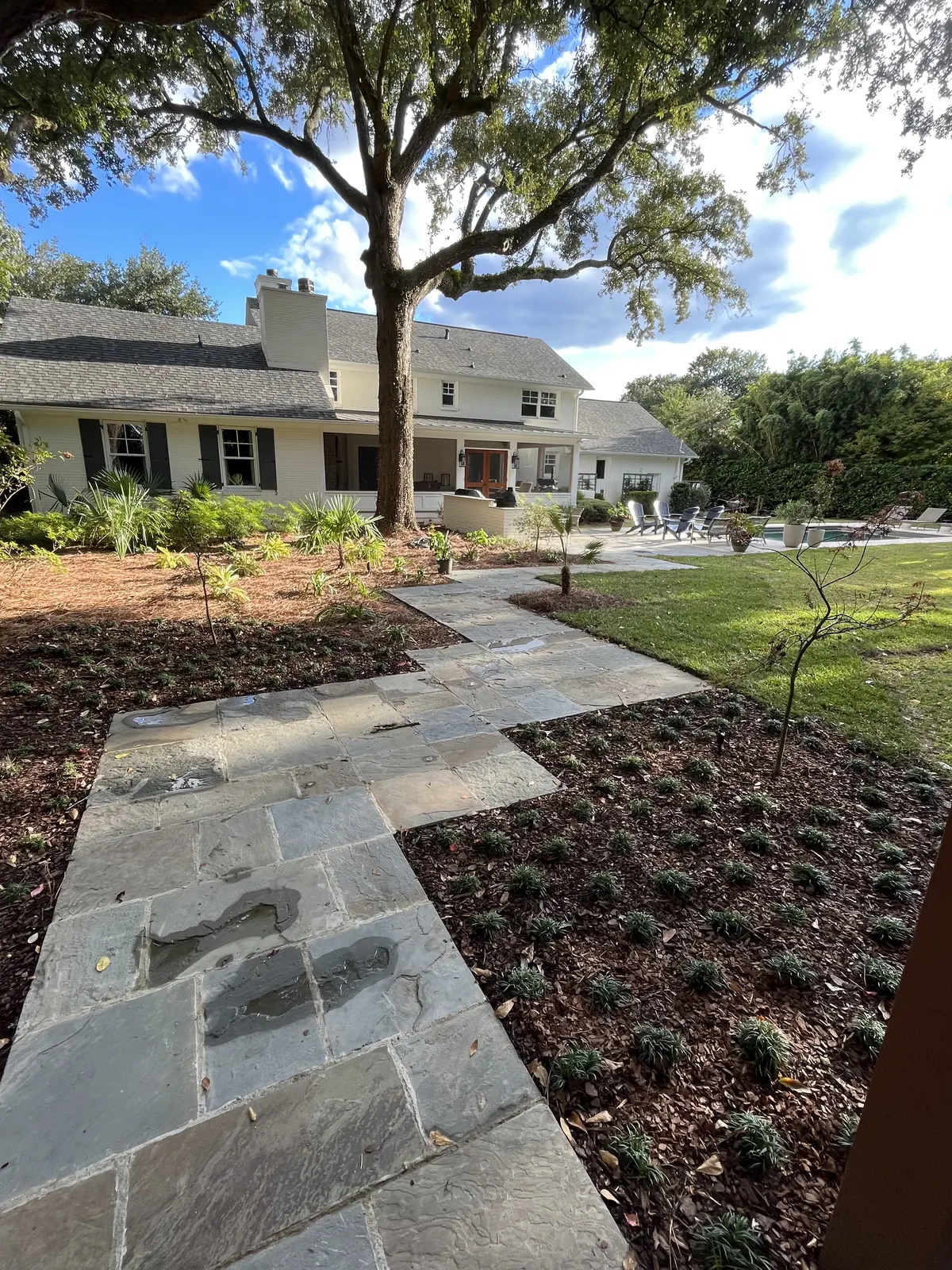
What we plant on a given property comes down to the yard and the style. Some landscapes are formal and sheared. Some are tropical. Some are really gardens. The planting should match the architecture of the house, which is where we start before anyone talks about a plant list.
Hedges and Screening
Most projects start here, because most people want privacy before they want anything else.
- Podocarpus, ligustrum and sweet viburnum are our workhorse hedges.
- Boxwood where the look is formal and the hedge is smaller.
- Podocarpus, ligustrum and sweet viburnum make excellent screening as well as hedging. Left to grow rather than clipped tight, they give you height and a solid evergreen wall.
- Bamboo for the fastest and densest screen of all. Certain types are not too maintenance heavy, and the type matters a great deal — this is not a plant to buy on your own and find out later.
A hedge is also where over planting does the most damage. Spaced to look finished on day one, it is a thicket in three years. We space for the size the plant is actually going to be.
Shade, Color and the Winter Garden
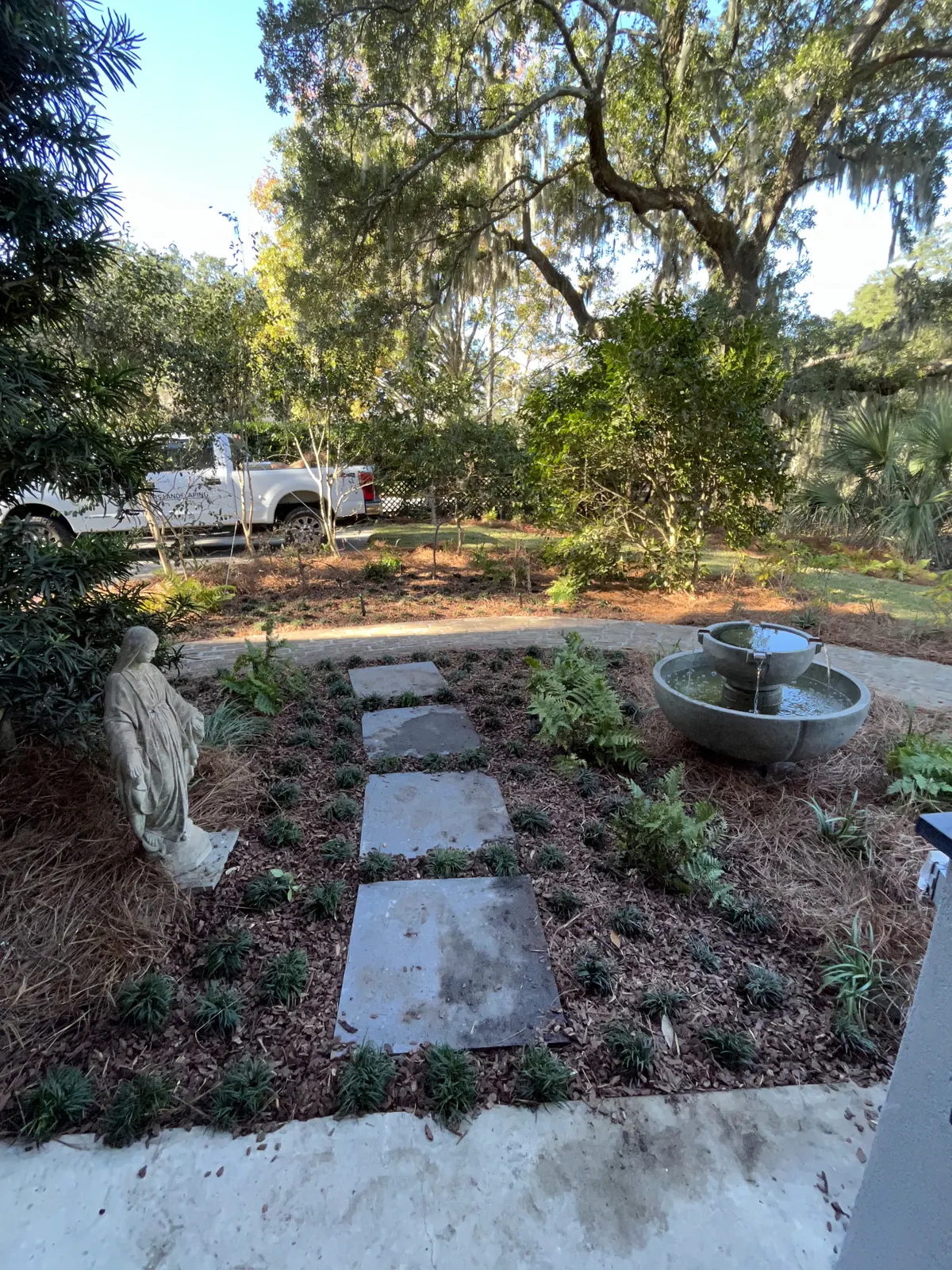
- Japanese maple — the garden plant for a shady spot, and the one people photograph.
- Camellia — medium sun, shade loving, and a big impact in winter color when the rest of the yard has nothing going on.
- Perennials for color through the season.
- Loquat — a tropical evergreen tree that fruits.
- Bottlebrush — tropical, takes shade, and prone to frost damage. Worth planting with that understood rather than discovering it in January.
Palms: More Choice Than Most People Realize
There are many more palms available here than most homeowners realize: lady palm, windmill palm, fan palm, saw palmetto and coontie among them. They differ in sun and shade tolerance, in frost tolerance, in eventual size and in texture, so the right palm for a shaded courtyard is not the one for an exposed front yard.
Ground Cover That Fills In Instead of Filling Up
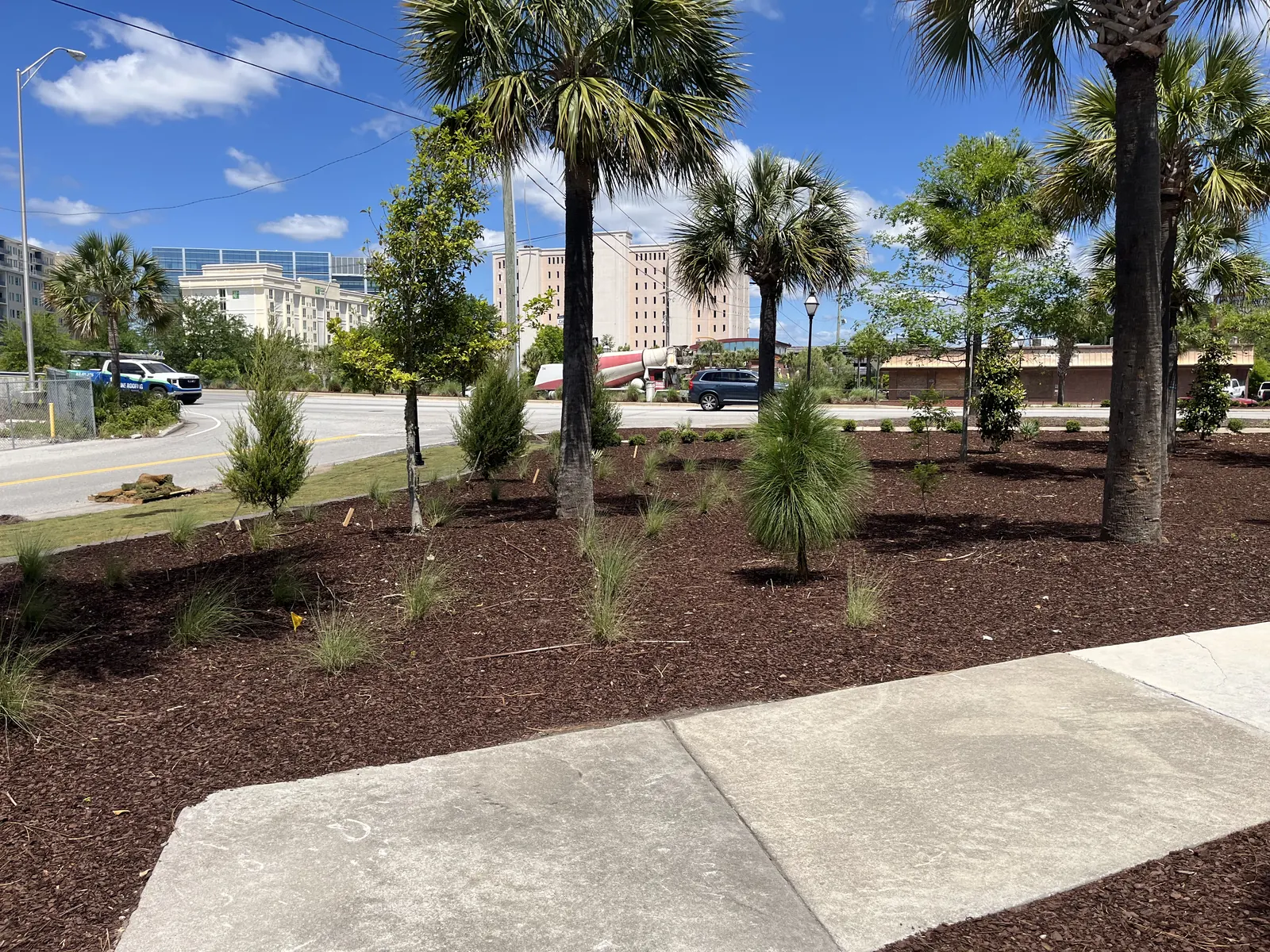
Agapanthus, sweetgrass and mondo are our regulars, along with the many ferns that thrive in Lowcountry shade.
Ground cover is the layer that makes a bed read as finished, and it is the cheapest way to avoid the mistake of planting too many shrubs to cover bare ground. Beds are finished with mulch and edging.
Vines and Climbers
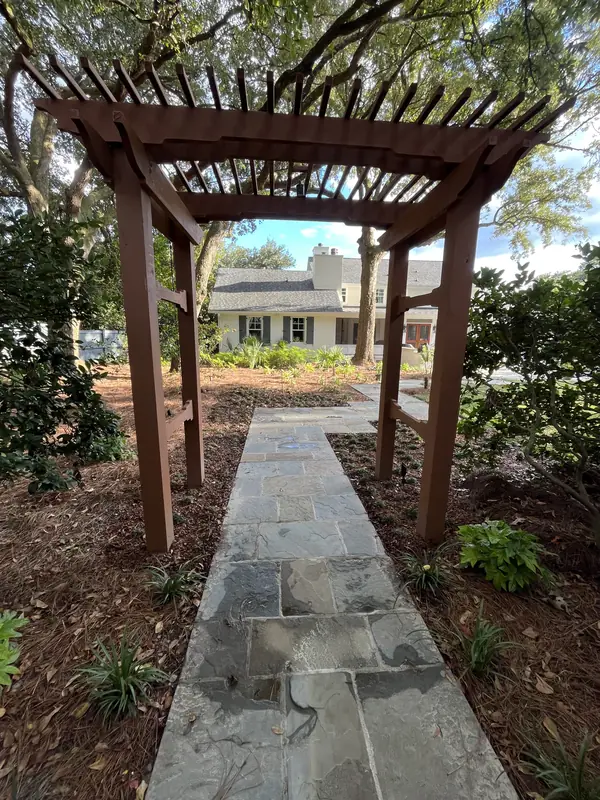
We plant the vine as well as building the thing it grows on. A vine is what softens a new structure, covers a blank wall or a fence, and puts scent by a door without taking up any ground.
Carolina jessamine, South Carolina’s state flower, is one of the two we plant most. It is evergreen, carries fragrant yellow flowers from late winter into spring, and will cover 12 to 20 feet of trellis or arbor in three or four growing seasons. It takes light shade but flowers best in sun. One thing to know before it goes in near small children: every part of the plant is poisonous.
Confederate jasmine is the other, and the usual alternative here if the jessamine’s poison rules it out — evergreen, heavily scented through spring and summer, salt tolerant, usually left alone by deer, and the safer bet close to the water.
One more thing, because it is everywhere around here: a jasmine planted at the foot of a live oak and left to find its own way up. Clemson’s advice is not to let any vine reach the top of a tree at all. Up in the canopy it shades out the branches it covers, and the added weight is what brings limbs down or uproots a tree in a storm — the damage English ivy is documented for.
The trouble at ground level is quieter. A dense mat of vine around the base is another layer of roots competing with the tree for water and feed, and anything held against the trunk keeps the bark permanently damp — which is how bark rots, and how disease and insects get in. Keep the vine and its mulch back off the trunk so the root flare stays visible, give it its own trellis, fence or post to climb, and you get the vine without spending the tree to get it.
Both want pruning once they have finished flowering, mostly to shape them and keep them on their support. If there is nothing to climb yet, we build the trellis or pergola too.
Spacing and Layering
That is the thinking behind how a planting gets laid out. Everything is spaced for what it will be, not for the size it is the day it goes in, and layered so the ground cover, the shrubs and the canopy each have room of their own instead of competing for the same of it.
It works the other way round too. A Japanese maple wants dappled shade and some relief from the afternoon sun here — in full Lowcountry sun the leaves scorch. If you want one and the yard has no shade to give it, we make some: a pergola or pavilion placed on the right side of it, or a larger tree planted to grow into that job. The structure and the planting get designed together, because we build both.
Trees for a Charleston Yard
The popular ones, and for good reason: live oak, bald cypress, holly, magnolia and crape myrtle.
Trees are the decision with the longest consequences in a yard. Size at maturity, where the shade will fall in ten years and what is underneath — drainage lines, a patio, the neighbor’s fence — all matter more than what the tree looks like on the truck. This is the part of a plan worth slowing down for.
Planting Near the Water
On the islands and along the water, salt spray decides what survives, and plants differ in how much salt they can take.
Plants with high salt tolerance grow in direct salt spray, right on the oceanfront. Plants with moderate tolerance will grow near the beach but do best sheltered behind tougher plants, a structure or a dune. So the toughest plants go on the front row, facing the water, and the softer ones go behind them.
Near salt water we reach for upright yaupon, most palms and grasses such as sea oats. Several plants elsewhere on this page take direct spray too: live oak, podocarpus and saw palmetto, along with cabbage palmetto and dwarf palmetto. For a sheltered spot behind them, agapanthus, loquat and American holly are moderately tolerant.
Some plants we use inland do not belong near salt. Japanese maple, boxwood and sweet viburnum have to sit well back from the water, and on some lots they cannot be planted at all.
These ratings are about salt spray. Salt water sitting on the roots after a king tide or a storm is a different problem, and most plants do not survive it. For lawns, see sod near the water.
How Planting Works With Us
- Consultation at your home, and an honest budget conversation.
- A design that suits the architecture, layered so plants grow together rather than fight each other. Drawings, with 3D renderings optional at additional cost.
- Prep before planting — grading, drainage and irrigation.
- Planting, trees and larger material first.
- Finishing with ground cover, mulch and bed edging.
Our 1-year plant warranty covers replacement of the plant and the labor. It does not apply without an automatic watering system, or to losses from acts of weather. Full detail on landscape design and installation.
Worth Reading Before You Start
Projects We’ve Built
Real jobs, with the story of how each one came together.

Frequently Asked Questions
What plants grow best in Charleston, SC?
For hedging and screening we rely on podocarpus, ligustrum and sweet viburnum, with boxwood where the look is formal. For shade and winter color, Japanese maple and camellia. Palms of many kinds, from lady palm and windmill to saw palmetto and coontie. For trees, live oak, bald cypress, holly, magnolia and crape myrtle.
What plants handle salt air in Charleston?
Salt spray is the test. Near salt water we use upright yaupon, most palms and grasses such as sea oats, and live oak, podocarpus and saw palmetto are highly salt tolerant. Agapanthus, loquat and American holly do better in a sheltered spot behind them, and Japanese maple, boxwood and sweet viburnum do not belong near salt.
Which plants get caught out by frost here?
Bottlebrush is the one to know about before you plant it: it is tropical, takes shade and is prone to frost damage. Palms vary widely in frost tolerance too, which is part of choosing the right one.
What is the best plant for privacy screening?
Podocarpus, ligustrum and sweet viburnum all screen well as well as hedging, and they are evergreen here. Bamboo gives the fastest and densest screen of all, though the type matters a great deal.
What ground cover works in Lowcountry shade?
Agapanthus, sweetgrass and mondo are our regulars, plus the many ferns that do well in shade here.
How do you decide what to plant in my yard?
The landscaping should match the architecture of the house. Beyond that it comes down to the individual yard and the style you want, whether that is formal and sheared, tropical, or more of a garden. We avoid over planting and layer correctly so the landscape grows together instead of fighting itself.
Areas We Serve
Cramers Landscaping provides its services throughout:
Get in Touch
Let’s talk about your yard
Tell us what you have in mind and we’ll put a quote together for it. The consultation at your home is free around Charleston, Mount Pleasant and Summerville. For Kiawah, Seabrook, Wadmalaw and Awendaw, or anywhere else more than an hour from Charleston or Summerville, there’s a charge for the proposal trip. It comes off the price if you go ahead with the build, and it is not refundable if you do not.
Based In
9153 Markleys Grove Blvd, Summerville, SC
We come to you. There is no office or showroom to visit.
Phone
Hours
Monday – Friday: 8:00 AM – 5:00 PM
Saturday: 9:00 AM – 2:00 PM
Sunday: Closed