Patio Installation in Charleston, SC: Pavers, Costs & Design Options (2026)

A patio is the foundation of a backyard. Everything else, outdoor furniture, a kitchen, a pavilion, a fireplace, builds on top of it. A patio that is well-built and properly designed becomes the most-used space in the home. A patio that was cut short on base preparation or built with materials that do not suit the Lowcountry climate becomes a problem within a few years: shifting, cracking, settling, or draining poorly.

In Charleston, patio installation involves specific challenges that do not apply in most other markets. Clay soils expand and contract with moisture. Rainfall is heavy and frequent. High water tables affect drainage design. And the aesthetic expectations for this market tend to be high, particularly in neighborhoods like Daniel Island, Mount Pleasant, and the sea island communities. Getting a patio right here requires real knowledge of the local conditions, not just general paving experience.

At Cramers Landscaping, we install custom patios throughout Charleston and the Lowcountry. This guide covers everything homeowners need to know: what materials work best, what installation actually involves, what things cost, and what separates a patio that lasts from one that does not.

Patio Material Options in Charleston

Material selection is one of the first and most important decisions in any patio project. Each option has different performance characteristics, aesthetics, and cost implications. Here is how they compare:

Natural Stone: Travertine, Bluestone, Marble, and Brick

Natural stone materials are our preference for most premium patio installations in Charleston. They have depth, texture, and a character that concrete alternatives cannot replicate. They also age well, with natural stone developing a patina that often looks better over time rather than fading or staining the way concrete does.

Travertine is one of the most popular choices we install for pool decks and patios in Charleston. It stays cooler underfoot in direct sunlight than concrete, has a warm, Mediterranean aesthetic that photographs beautifully, and holds up well in coastal conditions. The porous surface also provides grip, which matters around pool areas.

Bluestone is a classic choice for traditional and transitional-style homes. It has a cool gray-blue tone that complements the coastal color palette of many Charleston properties. Bluestone is dense and durable, requires minimal maintenance, and has a sophisticated look that holds up in high-end residential applications.

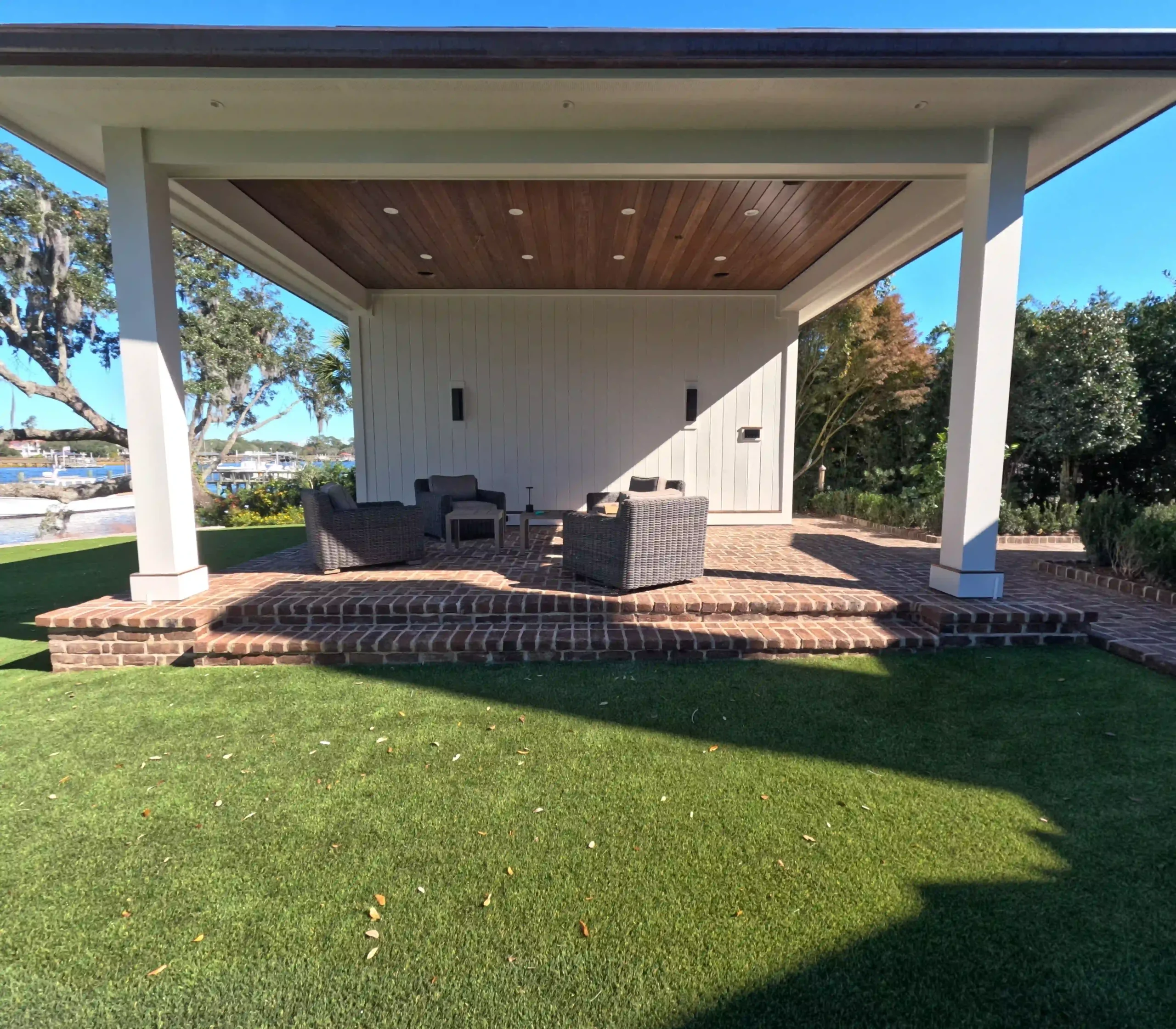
Brick is a natural fit for historic Charleston and traditional-style homes throughout the region. Classic reclaimed brick has a character and warmth that nothing else matches. Brick patios and walkways are timeless, and the material integrates naturally with the architectural character of the city.

Marble is the most refined option we install. It is stunning in the right application, particularly around pool decks and covered outdoor dining areas, but it requires more maintenance than granite, travertine, or bluestone. Marble shows etching from acidic materials and requires regular sealing to perform well long-term.

Pricing for natural stone patio installation at Cramers typically runs $26 to $30 per square foot for brick, travertine, or bluestone, installed.

Concrete Pavers: Techo-Bloc and Similar

Concrete pavers are the right choice when the project calls for a more contemporary look, a tighter budget, or a specific color or pattern that natural stone does not offer. Among the concrete paver options on the market, Techo-Bloc is our preferred manufacturer. Their products are denser and better engineered than most concrete paver alternatives, with a more refined finish and a wider range of profiles that work well in both modern and traditional residential applications.

Concrete pavers are also individually replaceable if one settles or gets damaged, which gives them a long-term serviceability advantage over poured concrete slabs. If one paver shifts or cracks, it can be lifted and replaced without disturbing the rest of the patio.

Pricing for concrete paver patio installation at Cramers typically runs $18 to $22 per square foot, installed.

What We Do Not Recommend (and Why)

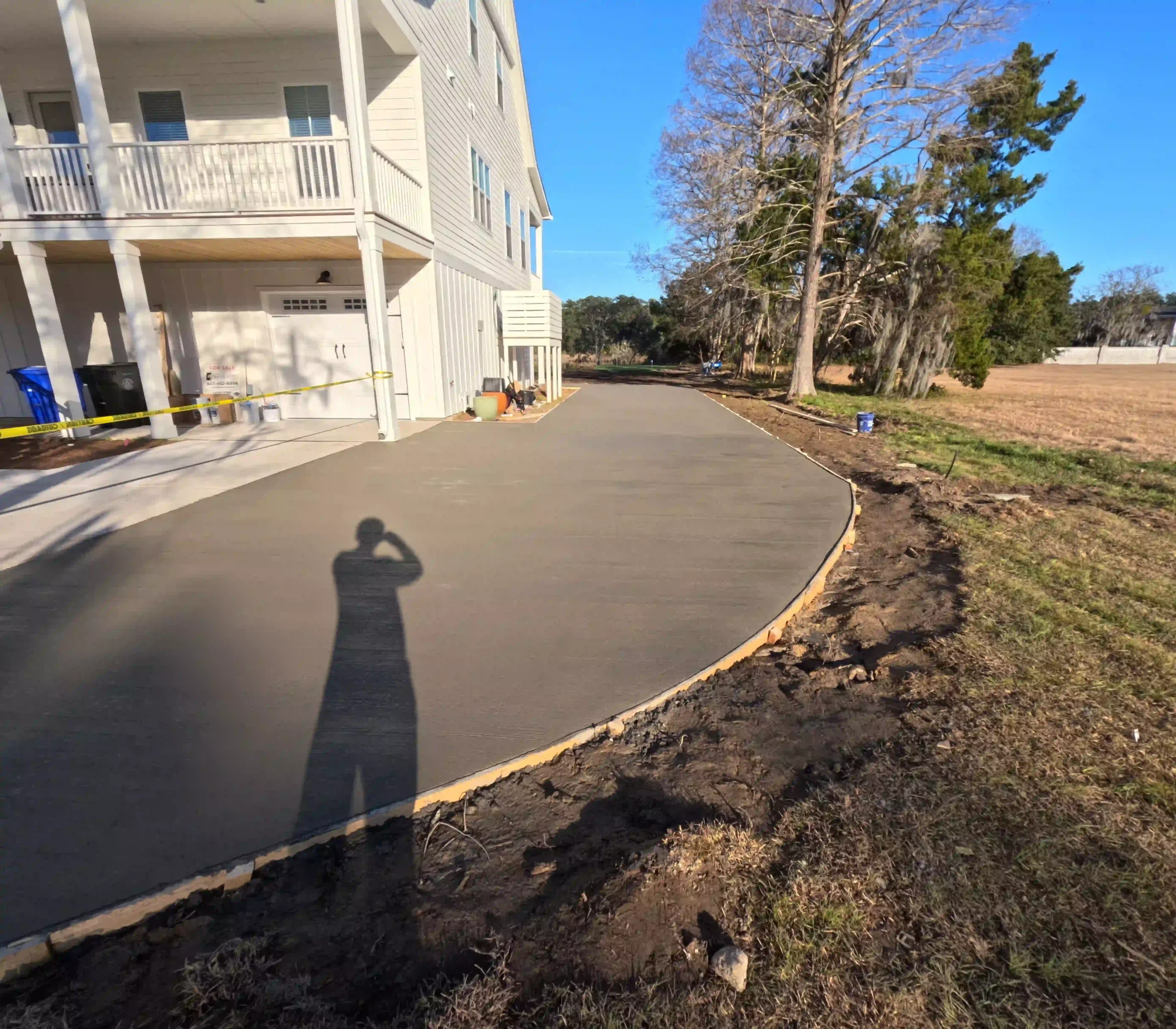
We prefer natural materials and quality concrete pavers over poured concrete slabs for most residential patio applications. Poured concrete will eventually crack. Charleston’s expansive clay soils and heavy rainfall put significant movement stress on rigid concrete slabs, and when a concrete slab cracks, you have limited options: grind and seal the crack (cosmetically temporary) or replace the whole section. Pavers, by contrast, can be individually lifted and reset when movement occurs.

Stamped concrete is a popular request, but it has the same structural limitations as plain poured concrete. The aesthetic deteriorates faster than natural stone as the surface weathers and the sealant wears off.

Base Preparation: Why It Matters More Than the Material

The most common patio failure we see in Charleston comes from inadequate base preparation, not bad materials. A beautiful travertine patio installed on an improper base will be uneven and cracked within a few years. A modest concrete paver patio installed on a properly engineered base will still look good a decade later.

Here is how we approach base preparation on every patio installation:

Standard Base for Concrete and Natural Pavers

For most paver installations, we excavate the site to the appropriate depth, typically 8 to 12 inches below the finished surface depending on the paver thickness and the site conditions. We then install a base of #57 granite aggregate. We specifically use granite aggregate rather than compacted soil or sand because it does not compact organically and provides excellent drainage through the base. Organic soil compacts inconsistently and causes paving to settle and shift, particularly in Charleston’s wet climate.

Over the #57 granite, we add a layer of #789 granite (finer-grade) to create a stable setting bed. We compact the base in lifts to achieve consistent density throughout.

Geotextile fabric is installed beneath the subbase on sites with challenging soil conditions. This fabric allows water to pass through while preventing soil migration up into the aggregate base over time.

Concrete Base for Precision Stone Applications

For marble pool decks and similar precision applications where tight tolerances matter, we pour a concrete subbase and mortar-set the stone on top. This approach gives us more control over finished surface elevation and flatness than a compacted aggregate base, and it provides a rigid substrate that minimizes movement in materials that can crack if the base shifts at all.

Why Pool Companies’ Patios Often Fail

This is worth saying directly, because we see it regularly: pool companies frequently use the excavated material from the pool dig as backfill beneath the surrounding pool deck. That organic soil does not compact properly, holds moisture, and shifts with Charleston’s wet-dry cycles. The result is pool decks that become uneven and crack pavers within a few years of installation. This is a base preparation problem, not a material problem. The same travertine installed on a properly prepared aggregate base performs entirely differently.

If you have an existing pool deck that has settled unevenly or developed cracked pavers, the base is almost always the underlying cause.

Drainage Design for Charleston Patios

Drainage is not optional in Charleston. With 50+ inches of annual rainfall, intense summer thunderstorms, and clay soils that drain slowly, every patio we design includes intentional drainage planning.

The approach depends on the specific site conditions:

Surface pitch is the most basic drainage solution: we slope the patio surface away from the home and toward the yard or a defined drainage point. All patio installations include minimum pitch to move water off the surface.

Drainage channels can be integrated flush with the patio surface in high-rainfall or low-lying areas. A linear drain channel at the edge or mid-point of a patio intercepts surface water before it accumulates.

French drains and catch basins are installed when the surrounding yard does not adequately receive or move water away from the patio area. We assess this during the site visit and recommend drainage solutions as part of the overall project scope.

For properties with significant drainage challenges, we address grading and drainage before patio installation, not after. Water problems do not disappear when you build over them.

Patio Design Ideas for Charleston Homes

The design approach varies based on the home’s architecture, the size of the outdoor space, and how the area will be used. Here are some configurations we install regularly:

The Entertainer’s Patio

A large, open patio designed for gathering, dining, and cooking. Usually 400 to 600 square feet of paved surface, often with a covered section and an outdoor kitchen along one edge. Natural stone or high-end concrete pavers, with the patio flowing into a pool deck if the property has a pool. Multiple seating zones: a dining area near the kitchen and a lounge area near a fire feature or at the pool’s edge.

The Intimate Courtyard

Common in downtown Charleston properties with limited square footage. A smaller patio, typically 150 to 300 square feet, with high walls (or dense screening plantings) creating privacy on at least two sides. Brick or bluestone to match the character of the neighborhood. Good lighting design makes these spaces feel expansive. A small fountain or water feature is often a nice addition on a tight urban lot where greenery is limited.

The Pool Surround

A comprehensive pool deck installation with a transition area for outdoor dining and lounging adjacent to the pool. Travertine is the most requested material. Usually includes a shaded area for seating (pergola or pavilion), an outdoor shower, and landscape buffers on the perimeter. For Isle of Palms and Kiawah Island properties, this is often the centerpiece of the outdoor living space.

The Transition Patio

A patio that connects the back door of the home to the yard and other outdoor features. More functional than purely social. Often includes a built-in grill station or small outdoor kitchen to serve the backyard without requiring a major covered structure. A clean, well-proportioned patio in this role significantly increases the daily livability of the property.

Patio Costs in Charleston (2026)

Patio costs vary based on material selection, project size, site conditions, and what is included in the scope. Here are realistic ranges based on our current project pricing:

MaterialInstalled Cost per Square Foot
Concrete pavers (Techo-Bloc or similar)$18 to $22
Brick, travertine, or bluestone$26 to $30
Marble (mortar-set on concrete base)$30+ depending on stone grade

For a typical 400-square-foot patio with drainage planning and full base preparation:

  • Concrete pavers: $7,200 to $8,800
  • Natural stone (travertine, bluestone, brick): $10,400 to $12,000

These ranges reflect installed cost only. If the project also includes a pavilion, outdoor kitchen, or significant grading and drainage work, those components are scoped separately.

Serving Charleston and Surrounding Communities

We install custom patios throughout the Charleston area, including North Charleston, Johns Island, Isle of Palms, and Kiawah Island. We are familiar with the permitting requirements, soil conditions, and design preferences specific to each area.

Frequently Asked Questions

What is the best paver for a Charleston patio?

For premium residential applications, we recommend travertine, bluestone, or brick depending on the home’s style. For projects where budget and design flexibility are the primary considerations, Techo-Bloc concrete pavers are our preferred option. The best answer for your specific project depends on the look you want, the surrounding architecture, and how the space will be used.

How long does patio installation take?

A standard patio installation typically takes one to two weeks depending on size and complexity. Projects with significant grading, drainage work, or precision stone applications take longer. We provide a specific timeline during the consultation.

Can I add an outdoor kitchen or pavilion to a patio later?

Yes, but it is significantly more efficient to plan for those additions during the initial patio installation. If we know a kitchen or pavilion is in the future, we can install the gas line, electrical conduit, and any necessary footings during Phase 1 so they are already in place when you are ready to add those features.

How do I maintain a paver patio?

Natural stone and concrete pavers are low-maintenance compared to poured concrete or wood decking. Annual or biannual sealing helps maintain the appearance and reduces staining. Weed inhibitor sand is applied in the joints between pavers to reduce vegetation growth. Individual pavers that shift or become unlevel can be lifted and reset without disturbing the rest of the patio.

Do patios require permits in Charleston?

Ground-level patios under a certain size generally do not require permits in most Charleston-area municipalities. Structures built over patios, such as pavilions and pergolas, do require permits. We confirm permit requirements during the consultation and manage the permitting process for any project element that requires it.

Ready to Install Your Patio?

A well-built patio transforms how you use your property every day. At Cramers Landscaping, we bring the same level of preparation, material quality, and craftsmanship to every installation, from a simple backyard patio to a full outdoor living complex.

Contact Cramers Landscaping to schedule a consultation. We will visit your property, review the site conditions, and put together a scope and estimate that reflects what the project actually requires to do it right.