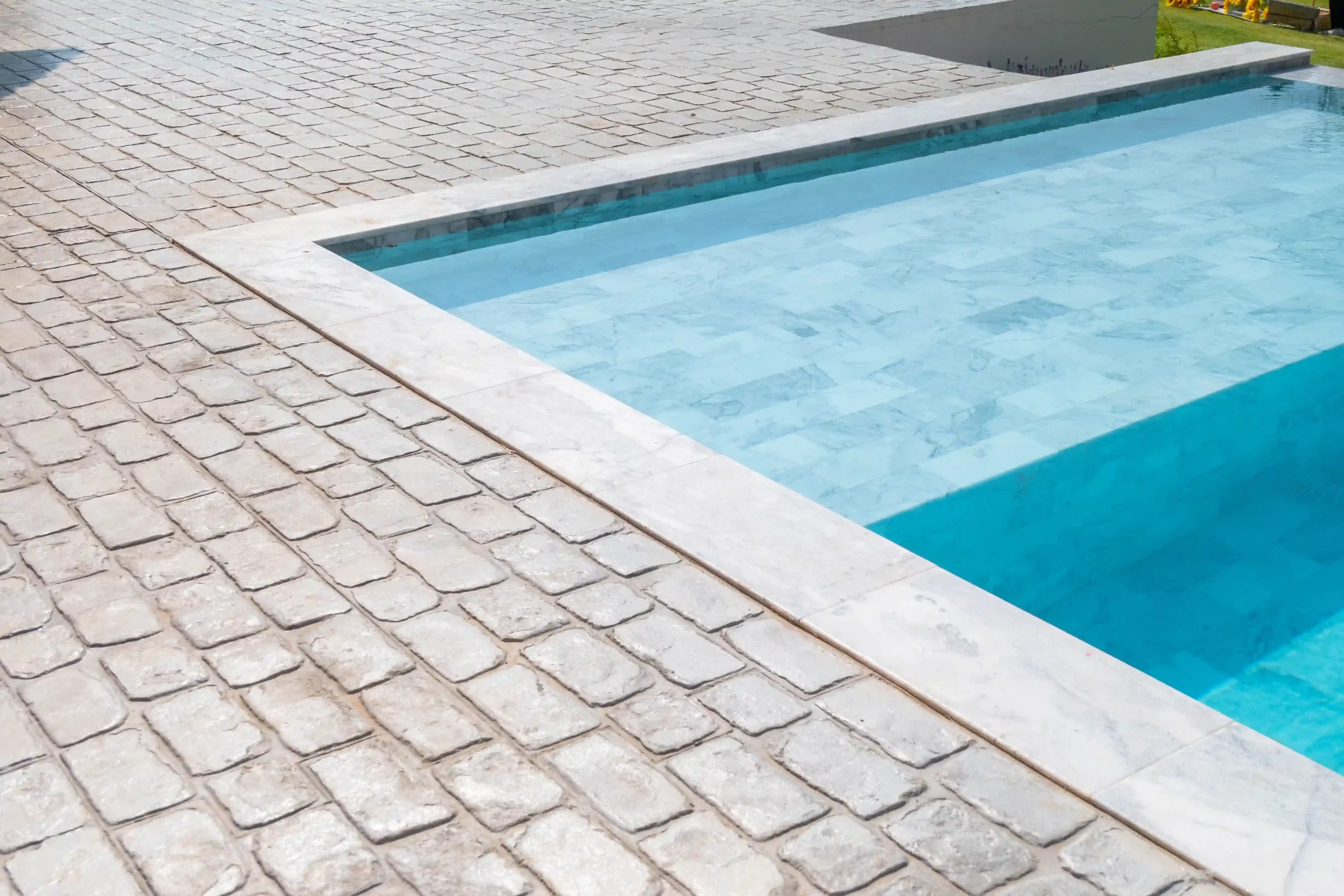
Concrete Overlays: The Versatile Choice
Concrete overlays are the most popular choice for pool deck resurfacing due to their versatility, durability, and cost-effectiveness. A thin layer of polymer-modified cement is applied over your existing concrete, creating a fresh, new surface that can be customized with a wide range of colors, textures, and patterns. Concrete overlays are also highly durable and slip-resistant, making them a safe and long-lasting choice for any pool deck.
Stamped Concrete: The High-End Look
If you love the look of natural stone or brick but not the high price tag, a stamped concrete overlay is the perfect solution. A special stamp is used to create a realistic texture on the fresh overlay, mimicking the look of more expensive materials. With a wide range of patterns and colors to choose from, you can create a custom look that is both beautiful and durable.
Spray Texture (Cool Deck): The Comfortable Choice
In the hot Charleston sun, a cool deck is a welcome relief for bare feet. A spray texture overlay, also known as a “cool deck,” is a spray-on acrylic coating that creates a textured, non-slip surface that stays cooler than traditional concrete. It is a great choice for families with children and anyone who wants a comfortable and safe surface around their pool.
Pavers: The Timeless Choice
Pavers offer a classic and timeless look that never goes out of style. They are available in a wide range of materials, including concrete, brick, and natural stone, and can be laid in a variety of patterns to create a custom look. Pavers are also extremely durable and can be individually replaced if they become damaged, making them a low-maintenance choice for the long term.
Charleston-Specific Considerations for Pool Deck Resurfacing
When planning a pool deck resurfacing project in Charleston, SC, it is essential to consider the unique aspects of the local climate and environment. The Lowcountry’s hot, humid summers, occasional freeze-thaw cycles in winter, and proximity to the coast all have an impact on the materials and methods you should choose.
Dealing with Charleston’s Heat and Humidity
Charleston’s summers are hot and humid, with temperatures regularly reaching the 90s and high humidity levels that make it feel even hotter. This intense heat can make traditional concrete pool decks uncomfortably hot to walk on with bare feet. When selecting a resurfacing material, consider options that stay cooler to the touch, such as a spray texture overlay (cool deck) or lighter-colored materials that reflect rather than absorb heat.
The high humidity also creates an environment where mold and mildew can thrive. Choose resurfacing materials that are resistant to mold and mildew growth, and ensure that your pool deck has proper drainage to prevent standing water. A professional contractor will ensure that your pool deck is sloped correctly to direct water away from your home and into drainage areas.
Coastal Considerations: Salt Air and UV Exposure
If you live near the coast, your pool deck is exposed to salt air, which can accelerate the deterioration of concrete and other materials. Modern resurfacing materials that incorporate polymer resins are highly resistant to salt damage and will maintain their beauty and integrity even in coastal environments.
Charleston’s year-round sun exposure also means that your pool deck is constantly subjected to UV rays, which can cause fading and discoloration over time. Choose materials with UV-resistant pigments and apply a high-quality sealer that includes UV protection to keep your pool deck looking vibrant for years to come.
Preparing for Occasional Freeze-Thaw Cycles
While Charleston’s winters are generally mild, occasional cold snaps can bring freezing temperatures. When water seeps into cracks in concrete and then freezes, it expands, causing the cracks to widen and the concrete to deteriorate. This is known as freeze-thaw damage. A properly applied resurfacing overlay seals the surface and prevents water from penetrating, protecting your pool deck from freeze-thaw damage.
Ensuring Proper Drainage in a High-Rainfall Climate
Charleston receives an average of 50 inches of rain per year, making proper drainage a critical consideration for any pool deck. Standing water not only creates a breeding ground for mosquitoes but can also lead to mold, mildew, and premature deterioration of your pool deck surface. A professional contractor will ensure that your pool deck is properly sloped and that drainage systems are in place to direct water away from the pool and your home.
Understanding the Investment: What Affects the Cost of Pool Deck Resurfacing?
The cost of resurfacing your pool deck can vary widely depending on several factors. Understanding these factors will help you plan a realistic budget and make informed decisions about your project.
Size and Complexity of Your Pool Deck
The most obvious factor affecting cost is the size of your pool deck. A larger deck will require more materials and labor, resulting in a higher overall cost. The complexity of your pool deck also plays a role. A simple rectangular deck is easier and faster to resurface than a deck with curves, multiple levels, or intricate design elements.
Material Selection
The type of resurfacing material you choose will have a significant impact on the overall cost. A basic concrete overlay is the most affordable option, while stamped concrete, pavers, and specialty coatings are more expensive. However, it is important to consider the long-term value of your investment. A higher-quality material that lasts longer and requires less maintenance may be more cost-effective in the long run.
Condition of Existing Concrete
If your existing concrete is in poor condition with extensive cracking or structural damage, additional repair work will be needed before the resurfacing can begin. This will add to the overall cost of the project. A professional contractor will assess the condition of your existing concrete and provide a detailed estimate that includes any necessary repairs.
Decorative Elements and Customization
If you want a custom design with multiple colors, intricate patterns, or decorative borders, this will increase the cost of your project. However, these decorative elements can significantly enhance the beauty and value of your pool deck, making them a worthwhile investment.
Professional Installation vs. DIY
While it may be tempting to save money by attempting a DIY pool deck resurfacing project, professional installation is highly recommended. A professional contractor has the experience, tools, and expertise to ensure that the job is done right the first time. Poor surface preparation, incorrect mixing ratios, or improper application techniques can result in a resurfacing job that fails prematurely, costing you more in the long run.
DIY vs. Professional Installation: Making the Right Choice
When considering a pool deck resurfacing project, one of the first decisions you will need to make is whether to hire a professional contractor or attempt the project yourself. While a DIY approach may seem like a way to save money, there are several important factors to consider.
The Challenges of DIY Pool Deck Resurfacing
Pool deck resurfacing is a complex process that requires specialized knowledge, tools, and materials. Surface preparation is the most critical step, and if it is not done correctly, the new overlay will not bond properly and will fail prematurely. Proper mixing of the resurfacing material is also essential. Incorrect ratios can result in a weak, brittle surface that cracks and deteriorates quickly.
Applying the resurfacing material evenly and smoothly requires skill and experience. An inexperienced DIYer may end up with an uneven surface, visible trowel marks, or other imperfections that detract from the beauty of the finished product. Finally, the timing of each step is critical. The material must be applied and finished within a specific window of time, and environmental conditions such as temperature and humidity must be taken into account.
The Benefits of Professional Installation
A professional contractor brings years of experience and expertise to your project. They have the specialized tools and equipment needed to properly prepare the surface, mix the materials, and apply the overlay. They understand the nuances of working with different materials and can recommend the best options for your specific needs and budget.
Professional contractors also have access to high-quality, commercial-grade materials that are not available to the general public. These materials are more durable and longer-lasting than consumer-grade products. Additionally, a professional contractor will stand behind their work with a warranty, giving you peace of mind that your investment is protected.
Perhaps most importantly, a professional contractor can complete the job quickly and efficiently, minimizing the disruption to your daily life. What might take an inexperienced DIYer several weekends to complete can often be finished by a professional crew in just a few days.
When DIY Might Be Appropriate
While professional installation is recommended for most pool deck resurfacing projects, there are a few situations where a DIY approach might be appropriate. If you have experience with concrete work and are comfortable with the process, and if your pool deck is small and in relatively good condition, you might be able to successfully complete a simple resurfacing project. However, even in these cases, it is important to carefully research the process, use high-quality materials, and follow all manufacturer instructions to the letter.
The Professional Resurfacing Process: A Step-by-Step Guide
While some homeowners may be tempted to tackle pool deck resurfacing as a DIY project, professional installation is highly recommended to ensure a beautiful, long-lasting result. Here is a step-by-step overview of the professional resurfacing process:
- Surface Preparation: This is the most critical step in the process. The existing concrete must be thoroughly cleaned and prepared to ensure that the new overlay will bond properly. This may involve pressure washing, grinding, or acid etching to remove any dirt, stains, or old coatings.
- Crack Repair: Any existing cracks in the concrete are repaired and filled to create a smooth, stable surface.
- Mixing and Application: The resurfacing material is mixed to the proper consistency and applied to the prepared surface. This may be done with a trowel, squeegee, or sprayer, depending on the material being used.
- Texturing and Stamping: If a decorative finish is desired, the fresh overlay is textured or stamped to create the desired pattern.
- Curing: The new surface is allowed to cure for the recommended amount of time. This is a critical step that ensures the durability and longevity of the new surface.
- Sealing: Once the surface is fully cured, a high-quality sealer is applied to protect it from the elements and make it easier to clean. The sealer also enhances the color and beauty of the new surface.
Maintaining Your Resurfaced Pool Deck: Tips for Long-Lasting Beauty
A professionally resurfaced pool deck is designed to be low-maintenance, but a little regular care will keep it looking its best and extend its lifespan significantly. Here is a comprehensive maintenance guide for your resurfaced pool deck in Charleston, SC.
Daily and Weekly Maintenance
Regular cleaning is the foundation of good pool deck maintenance. Sweep or blow off your pool deck regularly to remove leaves, dirt, and other debris. This prevents organic matter from staining the surface and keeps your deck looking clean and inviting. After pool use, rinse the deck with a hose to remove any pool chemicals, sunscreen, or other substances that could cause staining.
Monthly Deep Cleaning
Once a month, give your pool deck a more thorough cleaning. Use a mild detergent mixed with water and a soft-bristle brush to scrub the surface. Pay special attention to areas around drains and in corners where dirt and debris tend to accumulate. Rinse thoroughly with clean water to remove all soap residue. Avoid using harsh chemicals, acidic cleaners, or abrasive scrubbers, as these can damage the sealer and the underlying surface.
Stain Removal
Different types of stains require different treatment methods. For organic stains from leaves or algae, a solution of water and household bleach (1 part bleach to 4 parts water) can be effective. Apply the solution to the stain, let it sit for a few minutes, then scrub and rinse thoroughly. For oil or grease stains, use a degreasing cleaner specifically designed for concrete surfaces. Always test any cleaning solution on a small, inconspicuous area first to ensure it does not damage or discolor the surface.
Protecting Your Pool Deck from Damage
Take steps to protect your pool deck from unnecessary wear and damage. Use furniture pads under the legs of chairs, tables, and loungers to prevent scratching and indentations. Avoid dragging heavy objects across the surface. If you use a grill near your pool deck, place it on a protective mat to prevent grease stains and heat damage. Keep sharp objects away from rubber or epoxy coatings, as they can puncture or tear the surface.
Seasonal Maintenance and Re-Sealing
The sealer on your pool deck is your first line of defense against stains, fading, and damage. Over time, the sealer will wear down due to foot traffic, UV exposure, and pool chemicals. Most sealers need to be reapplied every 2-3 years to maintain optimal protection. A professional contractor can assess the condition of your sealer and recommend the appropriate re-sealing schedule for your specific material and usage patterns.
Before winter, even in mild Charleston, it is a good idea to give your pool deck a thorough cleaning and inspection. Look for any cracks or damage that may have developed during the summer and have them repaired promptly to prevent them from worsening over the winter months.
Professional Inspections
Consider scheduling a professional inspection of your pool deck every few years. A trained eye can spot potential problems early, such as small cracks, areas where the sealer is wearing thin, or drainage issues. Addressing these problems early can prevent more costly repairs down the road and extend the life of your resurfaced pool deck.
Why Choose Cramer’s Landscaping for Your Pool Deck Resurfacing Project?
At Cramer’s Landscaping, we are experts in all aspects of hardscape design and installation, including pool deck resurfacing in Charleston, SC. We understand the unique challenges of the Charleston climate and use only the highest quality materials and installation techniques to ensure a beautiful and long-lasting result. Our team of experienced professionals will work with you to create a custom design that meets your needs and exceeds your expectations.
We specialize in a wide range of resurfacing options, from classic concrete overlays to decorative stamped concrete and cool deck spray textures. Whether you want to simply refresh the look of your existing pool deck or completely transform it with a new design, we have the expertise and creativity to bring your vision to life. We also offer a full range of complementary services, including concrete services, patios and pavers, and hardscape installation, allowing us to create a complete outdoor living environment.
Our commitment to quality extends beyond the materials we use and the craftsmanship we provide. We are dedicated to exceptional customer service from the initial consultation through project completion and beyond. We take the time to understand your needs, answer your questions, and keep you informed throughout the entire process. We are proud of our reputation for quality and customer satisfaction, and we stand behind our work with a comprehensive warranty.
If you are ready to transform your pool deck and create a beautiful, safe, and inviting outdoor space, contact us today for a free consultation. Let us show you how we can enhance the beauty and value of your Charleston home with professional pool deck resurfacing. Learn more about our company and our commitment to excellence in every project we undertake.